Showing posts with label United States. Show all posts

Faygo: The Rise of Detroit's Iconic Soda Brand

Faygo Beverages, Inc., originally known as Feigenson Brothers Bottling Works, was founded in Detroit, Michigan, in 1907 by Russian immigrant bakers Ben and Perry Feigenson. Having moved to America to seek better opportunities, the brothers used their skills as bakers to create unique soda flavors based on their cake frosting recipes. Their first creations were fruit punch, strawberry, and grape sodas, which quickly gained local popularity. The early distribution of Faygo was modest, with the brothers delivering their sodas on horse-drawn wagons. At the time, a bottle of soda sold for just three cents, or customers could buy two bottles for a nickel, making Faygo both affordable and accessible.

In 1921, the brothers realized that their brand needed a shorter, more memorable name. They chose “Faygo,” a simplified version of their family name, Feigenson, which also helped make the brand stand out. Faygo then embarked on an era of innovation and expansion, continually adding new flavors to its growing product line. Among the most iconic were Faygo Redpop, a sweet strawberry-flavored soda, and Rock & Rye, a cream soda with hints of vanilla and cola. These flavors became synonymous with the Faygo brand, contributing to its long-lasting success.

In the 1950s, Faygo adopted forward-thinking marketing strategies, including the use of animated television commercials. These commercials were groundbreaking at the time and helped establish Faygo as a household name in Detroit and the surrounding areas. However, Faygo faced obstacles, such as adapting to Michigan’s container deposit law passed in 1978, which required changes in how beverages were packaged and sold. Despite these challenges, Faygo continued to thrive, drawing on its loyal customer base and commitment to quality.

In 1987, Faygo was acquired by National Beverage Corporation, which helped to expand its distribution while maintaining its identity as a beloved regional brand. Today, Faygo remains a cultural staple in the Midwest, celebrated for its vast array of flavors and nostalgic charm, connecting generations through its iconic sodas.
Faygo: The Rise of Detroit's Iconic Soda Brand

Mars, Inc.: From Candy Kitchen to Global Powerhouse

Mars, Incorporated is one of the world’s largest privately held companies, best known for its candy bars, chewing gum, and pet care products. It began humbly in 1911 when Frank C. Mars, taught candy making by his mother, started selling butter cream candies from his kitchen in Tacoma, Washington. Together with his second wife, Ethel V. Mars, he launched the Mars Candy Factory, laying the foundation for what would become a global powerhouse.

By the 1930s, the company was shaken by a family feud. Frank’s son, Forrest Mars, Sr., after disagreements with his father, moved to England where he established a separate candy company. While there, Forrest introduced innovations such as the Mars Bar and later developed the idea for M&M’s, which debuted in 1941 and went on to become one of the most popular candies in history. Today, more than 400 million M&M’s are produced daily in the United States alone.

The Mars family businesses eventually reunited, and under the leadership of Forrest E. Mars, Jr., John F. Mars, and Jacqueline Mars, the company expanded globally through the late 20th century. In 2001, management transitioned to non-family executives, though ownership remained within the Mars family, keeping it one of the largest family-owned firms in the world.

Mars has grown far beyond confectionery. The acquisition of Doane Petcare in 2007 positioned the company as a leader in the pet food industry, with brands like Pedigree, Whiskas, and Royal Canin. Its subsidiaries now include Mars Wrigley Confectionery, Petcare, Food, and Mars Edge, a life sciences division focused on nutrition. Mars also operates Ethel M Chocolates, a premium retail brand honoring Ethel Mars’s legacy.

Headquartered in McLean, Virginia, Mars employs over 140,000 people in more than 80 countries. Despite its vast scale, the company emphasizes its “Five Principles”—quality, responsibility, mutuality, efficiency, and freedom—as guiding values.

Today, Jacqueline and John Mars, heirs to Forrest Sr.’s fortune, remain co-owners, each worth an estimated $24 billion. Mars continues to rank among the top privately held corporations in the United States, balancing tradition with innovation while expanding its influence in food, health, and pet care.
Mars, Inc.: From Candy Kitchen to Global Powerhouse

White Castle: The Birth of America's Iconic Fast-Food Hamburger

White Castle, an iconic American fast-food chain, was founded in Wichita, Kansas, in 1921 by Walter (Walt) A. Anderson and Billy Ingram. At the time, Americans were wary of ground beef due to Upton Sinclair's 1906 novel "The Jungle," which exposed the meat packing industry's unsanitary conditions. Most customers preferred solid pieces of steak to ensure they were not consuming anything unsafe.

Walt Anderson, a former janitor and short order cook, sought to rehabilitate the hamburger's reputation. Passionate about burgers, he opened a small restaurant in Wichita dedicated to selling them. He grilled the burgers in front of his customers, allowing them to witness the cleanliness of the meat and equipment firsthand. This transparency helped build trust and led to the restaurant's success.

To expand his venture, Anderson partnered with Billy Ingram. Together, they began opening more hamburger restaurants designed to look like small white medieval forts, symbolizing purity and solidity. They named these establishments White Castles. In 1921, with just $700 and a vision, Anderson and Ingram started selling small, square hamburgers for five cents each. These burgers, easy to eat and sold by the sack, were affectionately called Sliders.

White Castle's unique business model and commitment to quality quickly gained popularity. By 1933, the corporate headquarters moved to Columbus, Ohio, reflecting the company's growth. Despite the Great Depression, White Castle thrived. By 1937, the company had nearly doubled its hamburger sales from 1930. This success contributed to the hamburger becoming a staple of American cuisine. The president of the National Restaurant Association even declared that the hamburger was as American as apple pie and coffee.

Today, White Castle remains a beloved fast-food chain, known for its innovative practices and iconic Sliders. The company's early focus on transparency and quality set a standard in the fast-food industry, and its legacy continues to influence how Americans perceive and enjoy hamburgers.
White Castle: The Birth of America's Iconic Fast-Food Hamburger

Devon Energy: A Legacy of Innovation, Growth, and Sustainability

Devon Energy Corporation, established in 1971 by John Nichols and J. Larry Nichols, has cemented itself as a key player in the hydrocarbon exploration industry. Headquartered in Oklahoma City, Oklahoma, the company has evolved into one of the largest independent oil and gas producers in the United States, with a focus on strategic growth and innovation.

From its inception, Devon Energy concentrated on acquiring and developing oil and gas properties. The decision to go public in 1988 was a pivotal moment, providing the capital necessary for expansion. The 1990s saw transformative growth, marked by notable acquisitions such as Hondo Oil & Gas in 1992 and PennzEnergy in 1999. These deals diversified Devon’s asset portfolio and significantly boosted production capacity.

In 2002, Devon Energy acquired Mitchell Energy, a groundbreaking move that solidified its leadership in the field of hydraulic fracturing. Mitchell Energy’s expertise in unconventional gas resource development positioned Devon to meet the burgeoning demand for natural gas. This acquisition was instrumental in shaping the company’s future and leveraging the potential of shale gas exploration.

Devon Energy’s commitment to technological advancement has been a cornerstone of its success. The company has invested heavily in innovative exploration and production techniques, including data analytics and automation, to enhance efficiency and reduce costs. Sustainability has also become a priority, with Devon implementing measures to minimize environmental impact, such as reducing methane emissions and employing water recycling in hydraulic fracturing operations. These efforts align with the industry’s increasing focus on environmental, social, and governance (ESG) criteria.

Currently, Devon Energy operates in prolific regions like the Barnett Shale, Delaware Basin, and Eagle Ford Group, areas known for their rich hydrocarbon reserves. The company’s 2021 merger with WPX Energy further bolstered its asset base and operational scale, creating a stronger platform for growth in both oil and natural gas markets.

Devon’s legacy of growth and resilience underscores its enduring impact on the energy sector. By balancing innovation with sustainability and strategic expansion, Devon Energy continues to play a vital role in meeting global energy demands while navigating the challenges of a transitioning energy landscape.
Devon Energy: A Legacy of Innovation, Growth, and Sustainability

Enron: Rise, Scandal, and the Legacy of Corporate Greed

Enron Corporation, once a giant in the energy industry, rose to prominence through innovative strategies and rapid expansion, only to collapse under the weight of scandal. Founded in 1985 by Kenneth Lay through the merger of Houston Natural Gas and InterNorth, Enron began as a regional pipeline company but quickly transformed into a global energy trading powerhouse. By leveraging new approaches to energy trading and promoting aggressive growth, Enron captivated Wall Street, with its stock value soaring during the 1990s.

Under Lay and later CEO Jeffrey Skilling, Enron expanded its business portfolio to include electricity, natural gas, broadband services, and more. Its innovative energy trading model, which involved creating complex derivatives and trading futures, was groundbreaking. The company's prowess and influence earned it recognition, and Fortune magazine named Enron "America's Most Innovative Company" for six consecutive years. However, this image of success concealed a troubling reality—Enron was engaging in unethical and fraudulent accounting practices to inflate profits and conceal its growing debt.

Enron's downfall began in earnest in 2001 when its financial misconduct was uncovered. Through tactics such as "mark-to-market" accounting, Enron recorded projected profits on long-term deals as immediate revenue, inflating earnings and disguising its deteriorating financial health. The company also used complex special purpose entities (SPEs) to transfer debt off its balance sheets, further misleading investors. As the truth emerged, Enron's stock plummeted, and in December 2001, the company declared bankruptcy—then the largest in U.S. history. The scandal also led to the dissolution of Arthur Andersen, one of the largest auditing firms globally, which had failed to scrutinize Enron's financial statements adequately.

The Enron scandal prompted a wave of reforms in corporate governance. In 2002, Congress enacted the Sarbanes-Oxley Act, introducing stricter financial reporting requirements and enhancing penalties for corporate fraud to improve transparency and accountability in U.S. corporations. Enron's story serves as a cautionary tale of the dangers of unchecked corporate greed and the necessity of ethical business practices to protect shareholders and the public from fraud.
Enron: Rise, Scandal, and the Legacy of Corporate Greed

United Fruit Company: Corporate Power and Political Influence in Latin America

The United Fruit Company, an American multinational corporation, was established in 1899 through the merger of the Boston Fruit Company and Minor C. Keith’s banana-trading enterprises. Minor C. Keith played a crucial role in the company’s formation, having built railroads in Costa Rica and established extensive banana plantations along the rail routes. This early infrastructure laid the foundation for United Fruit’s dominance in the banana trade. With the merger, the company quickly became a monopolistic force, controlling vast territories and transportation networks across Central America, the Caribbean, and parts of South America.

United Fruit not only established banana plantations but also built critical infrastructure such as railroads, ports, and telegraph lines to facilitate the export of bananas to the United States and Europe. This infrastructure development became central to the economies of the regions in which the company operated. However, the heavy reliance on United Fruit’s business often led to economic and political manipulation. Local economies were restructured to prioritize banana production over other forms of agriculture, which contributed to economic dependency on the company. This dominance gave rise to the term “banana republics,” describing countries where United Fruit’s influence was so pervasive that it shaped national policies, often to the detriment of the local population. Governments became heavily influenced or controlled by the company, leading to an erosion of sovereignty in many countries.

The company’s practices attracted increasing criticism for labor exploitation and political interference. Workers on United Fruit’s plantations faced harsh conditions, including low wages, long hours, and poor living standards. Labor movements and strikes were often suppressed, sometimes violently. The company’s involvement in the 1954 Guatemalan coup d’état, where it allegedly worked with the CIA to overthrow President Jacobo Árbenz after he attempted to redistribute unused land owned by United Fruit, remains one of the most infamous examples of corporate-political entanglement.

In 1970, United Fruit merged with AMK to form the United Brands Company, which was later renamed Chiquita Brands International in 1984. Despite its controversial history, United Fruit’s legacy continues to influence the global banana industry and the economic landscapes of many Latin American nations. The company’s rise and fall serve as a key case study in the intersection of corporate power and political influence in developing countries.
United Fruit Company: Corporate Power and Political Influence in Latin America

Budweiser: The Rise of America's Iconic Beer

Budweiser, one of the most iconic American beers, has a storied history that dates back to the 19th century. The brand was introduced in 1876 by Adolphus Busch and his friend Carl Conrad in St. Louis, Missouri. Inspired by a trip to Bohemia, they aimed to create a “Bohemian-style” lager that would appeal to American tastes. Busch’s visit to Europe exposed him to various brewing techniques, and he was particularly impressed by the pale lagers popular in Bohemia, known for their refreshing qualities and drinkability. These qualities were distinct from the darker, heavier ales that were common in the United States at the time. Busch saw an opportunity to introduce a lighter beer that would be more suited to American preferences, especially considering the climate and the emerging culture of leisure and dining out.

Adolphus Busch, a German immigrant, joined his father-in-law’s brewing business, which was later renamed Anheuser-Busch Brewing Association in 1879. Before Budweiser’s introduction, American beer drinkers primarily consumed heavy, dark ales. However, the hot St. Louis summers called for a lighter, more refreshing beer. Busch’s experience in the brewing industry, combined with his keen understanding of American consumer preferences, allowed him to perfect a recipe that would resonate with a broad audience. Budweiser’s smooth, crisp lager quickly gained popularity, not just in St. Louis but across the United States. This success was further fueled by Busch’s embrace of pasteurization and refrigerated railcars, which ensured that Budweiser could be shipped across the country while maintaining its quality and taste.

Budweiser’s success can be attributed to its consistent quality and innovative marketing strategies. The brand adopted the slogan “The King of Beers,” a nod to its ambition and quality. Over the years, Budweiser has been involved in several trademark disputes with the Czech brewery Budweiser Budvar over the use of the name "Budweiser." These disputes highlight the global recognition and value of the Budweiser brand. Despite these challenges, the brand has successfully maintained its identity and market position.

Today, Budweiser is a global brand, available in over 80 countries. Despite changes in ownership and market dynamics, Budweiser has remained true to its original recipe and brewing methods, maintaining its position as a beloved American beer. The brand's ability to adapt while staying true to its roots has ensured its continued success and iconic status in the beer industry.
Budweiser: The Rise of America's Iconic Beer

The History of American Express: From Express Delivery to Global Financial Services

American Express Company, founded in 1850, has a rich history that reflects the economic and technological transformations of the United States. Established in New York, the company emerged as a vital player during the country’s rapid westward expansion, offering reliable express delivery services at a time when the U.S. Postal Service was inefficient and largely inaccessible in many parts of the nation.

In the mid-19th century, the U.S. Postal Service faced significant limitations. Its services were slow, costly, and geographically restricted, often unable to reach remote and newly settled areas. Moreover, the postal system could only handle small, letter-sized envelopes, making it impossible to send larger or more valuable items through the mail. This inefficiency created a demand for private express services that could guarantee secure and timely deliveries across vast distances.

American Express was founded in Buffalo, New York, as a joint stock corporation, resulting from the merger of express mail companies owned by Henry Wells, William Fargo, and John Butterfield. These three pioneers recognized the need for a more reliable and expansive delivery network and capitalized on the opportunity by forming American Express as an express business and freight forwarding company. The company initially headquartered at the intersection of Jay Street and Hudson Street in the TriBeCa section of Manhattan, reflecting its central role in the burgeoning commercial landscape of New York City.

As the company grew, it moved its headquarters to 65 Broadway in 1874, situating itself in what was rapidly becoming the Financial District of Manhattan. This relocation symbolized American Express's rising prominence in the business world and its strategic positioning within the heart of the American financial industry.

By the early 1880s, American Express began to diversify its services, venturing into financial services with the launch of a money order business in 1882. This marked the company's initial steps beyond express delivery, laying the groundwork for its future expansion into a global financial services provider.

A significant milestone in American Express's history was the invention of the Traveler’s Cheque in 1891. Created by Marcellus Berry, an employee of American Express, the Traveler's Cheque became an essential financial instrument for international travelers. Its introduction established American Express as a truly international company, providing travelers with a secure and convenient means of carrying money abroad.

The outbreak of World War I in 1914 further solidified American Express’s reputation as a reliable financial institution. During a time of global instability, American Express offices in Europe were among the few that honored letters of credit issued by various banks, assisting stranded American travelers when other financial institutions failed to do so.

In the mid-20th century, American Express entered the burgeoning card industry. In late 1957, the company decided to launch its charge card, a bold move that would redefine its identity. By the official launch date of October 1, 1958, public interest was so strong that American Express issued 250,000 cards prior to the launch. The card debuted with an annual fee of $6, slightly higher than that of the Diners Club card, reflecting American Express's premium brand positioning. Initially made of paper, the cards evolved into embossed ISO 7810 plastic in 1959, an industry innovation that set the standard for modern payment cards.

Today, American Express is a global financial services giant, known for its credit cards, travel services, and financial products. Its evolution from an express delivery company to a financial powerhouse exemplifies its adaptability and enduring relevance in a changing world.
The History of American Express: From Express Delivery to Global Financial Services

Hy-Vee: From Humble Beginnings to Industry Leader

In 1930, two Iowa businessmen, Charles Hyde and David Vredenburg, formed a grocery store partnership that would eventually evolve into one of the largest employee-owned companies in the United States. Before this collaboration, both Hyde and Vredenburg had individually owned and managed several stores in Iowa and Missouri. They opened their first joint venture, a general retail store in Beaconsfield, Iowa, which sold both groceries and dry goods such as clothing. This marked the humble beginnings of what would become Hy-Vee.

For the first few years, Hyde and Vredenburg continued to operate their separate stores and managed some with other partners, while also running stores together. By 1934, the general stores operated under names such as The Supply Stores, Hyde Service Store, and Vredenburg Grocery began to focus exclusively on groceries. This strategic shift helped streamline operations and cater to the growing demand for specialized grocery stores.

In 1938, the original partnership was dissolved when Hyde & Vredenburg was incorporated. This new corporate structure included 15 stores across Iowa and Missouri, owned by 16 store managers who traded their local store ownership for corporate stock. This move laid the foundation for Hy-Vee’s unique heritage as an employee-owned organization. The company headquartered in Lamoni, Iowa, appointed Dwight Vredenburg, son of co-founder David Vredenburg, as its president. That year, the company's annual sales were about $1.5 million, reflecting its growing presence in the region.

By 1940, Hy-Vee was already pioneering changes in the grocery industry. When the company introduced grocery carts, or "baskets on wheels," at its Centerville, Iowa store, customers were initially reluctant. The carts reminded women of baby buggies, and men felt they were "for sissies whose arms weren't strong enough to carry a few groceries." However, offering free candy bars in each new cart quickly persuaded customers to adopt the new convenience, showcasing Hy-Vee’s innovative approach to customer service.

Hy-Vee continued to expand significantly in the 1970s. The company opened new stores, built additional warehouse space, and embraced new technology. In 1971, a 78,000-square-foot addition increased the total capacity of the Chariton warehouse to 430,000 square feet. In 1976, Hy-Vee constructed a secondary warehouse and office complex in Cherokee, Iowa. The company also ventured into new markets, opening stores in South Dakota in 1975, Nebraska in 1977, and Illinois in 1979. Notable milestones included the opening of the 100th store in Keokuk, Iowa, the first in the chain to use electronic cash registers, and surpassing the $500 million annual sales mark in 1978.

Today, Hy-Vee stands as a testament to the vision and hard work of its founders, with a strong commitment to employee ownership and customer satisfaction. The company’s growth from a small general store in Iowa to a major player in the grocery industry highlights its ability to adapt and innovate, ensuring its success for generations to come.
Hy-Vee: From Humble Beginnings to Industry Leader

From Hot Dogs to Hamburgers: The McDonald's Journey

In 1937, the MacDonald brothers opened their first restaurant, the Airdrome, in Arcadia, California. They initially sold hot dogs, orange juice, coffee, and tea. In 1940, Dick and Mac McDonald opened a barbeque restaurant in San Bernardino, California. Their business took a revolutionary turn in 1948 when they introduced the "Speedee Service System," establishing the principles of the modern fast-food restaurant. This system featured streamlined operations, allowing them to sell 15-cent hamburgers and 10-cent fries efficiently.
The present McDonald's corporation traces its founding to Ray Kroc's franchised restaurant opening in Des Plaines, Illinois, on April 15, 1955. This was the ninth McDonald's restaurant overall, but it marked a significant shift in the company's trajectory. Kroc, an ambitious entrepreneur, had mortgaged his home and invested his entire life savings to become the exclusive distributor of the Multimixer, a five-spindled milkshake maker. Intrigued by the McDonald brothers' successful use of eight Multimixers simultaneously, Kroc drove to California in 1954 to meet them. At 52 years old, he saw potential in their operation and decided to open a franchise.

The Des Plaines restaurant, which Kroc opened in 1955, achieved first-day revenues of $366.12. This location is no longer a functioning restaurant but serves as a museum that preserves McDonald's memorabilia and artifacts, including the Multimixer. Kroc eventually purchased the McDonald brothers' equity in the company, leading its global expansion. Today, McDonald's operates over 39,000 restaurants worldwide, serving approximately 69 million customers daily. The company's success is attributed to its consistency, innovative marketing strategies, and ability to adapt to changing consumer preferences. This remarkable journey from a small hot dog stand to a global fast-food empire highlights the impact of strategic vision and entrepreneurial spirit in business.
From Hot Dogs to Hamburgers: The McDonald's Journey

Colonel Sanders: The Legacy of KFC's Culinary Pioneer

In 1939, Colonel Harland Sanders perfected his iconic blend of 11 herbs and spices, creating the renowned KFC fried chicken recipe. Born on September 9, 1890, Sanders mastered a variety of regional dishes by age seven, showcasing an early culinary prowess. By the age of forty, he owned a service station, motel, and café in Kentucky. In 1956, Sanders sold his Corbin, Kentucky, restaurant to focus on expanding his business by enlisting new franchisees.

By 1964, Sanders’ dedication transformed his humble beginnings into a thriving franchise network, with 600 outlets across the United States and Canada. This growth culminated in KFC being listed on the New York Stock Exchange in 1971, highlighting its significant impact on the fast-food industry.

Colonel Sanders passed away in 1980, leaving behind a legacy that continued to evolve. In 1994, KFC expanded its menu in the US and Australia to include non-fried chicken options, catering to changing consumer preferences and solidifying its position as a global fast-food leader. Today, KFC remains a testament to Sanders’ entrepreneurial spirit and culinary innovation, continuing to serve millions of customers worldwide.
Colonel Sanders: The Legacy of KFC's Culinary Pioneer

JCPenney's Rise and Fall: A Legacy in Transition

J.C. Penney & Co., a cornerstone in American retail, originated modestly in 1902 when James Cash Penney and William Henry McManus established their inaugural store in Kemmerer, Wyoming. Penney's entrepreneurial journey commenced in Missouri, where he refined his skills at a local dry goods store for eight years prior to venturing westward. The initial establishment, fittingly named The Golden Rule, embodied Penney's principles of equitable dealings and superior service.

By 1912, The Golden Rule had evolved into a chain of 34 stores, marking the beginning of an impressive trajectory. Assuming majority ownership in 1913, Penney led the company's rebranding as J.C. Penney Stores Company, swiftly expanding throughout the American West. The subsequent years witnessed substantial growth, with the chain ballooning from 83 to 175 stores between 1915 and 1917, propelled by a decentralized model empowering store managers to establish new outlets.

Enduring the challenges of the Great Depression, JCPenney emerged as a leader in soft goods by 1950, earning accolades from Fortune Magazine as the "King of Soft Goods," with Penney himself hailed as the "Man with a Thousand Partners." By Penney's passing in 1971, the retailer boasted over 1,600 stores, firmly established as the fifth-largest US retailer, predominantly located in burgeoning suburban malls.

Nevertheless, the company's peak was overshadowed by increasing competition in the 1980s and 1990s. The ascent of discount giants like Walmart and Target eroded JCPenney's market share, attracting budget-conscious customers. The Great Recession of 2008 dealt a severe blow, exacerbating the migration of shoppers to discount competitors. Despite efforts to stimulate growth, such as reintroducing appliances, the company struggled with successive CEO changes and faltering strategies.

The nadir came in 2020 amid the COVID-19 pandemic, leading to JCPenney's bankruptcy after 118 years of operation. Mandatory store closures and declining sales accelerated the inevitable, resulting in the closure of over 200 outlets during bankruptcy proceedings. However, a glimmer of hope emerged with the acquisition by Simon Property Group and Brookfield Asset Management for $800 million, signaling a potential revival under new management.

In retrospect, the decline of J.C. Penney underscores the importance of adaptability and resilience in the ever-changing retail landscape. While its legacy endures in American commerce history, the story of JCPenney serves as a cautionary tale, reminding industry leaders of the dangers of complacency and the necessity of innovation in a fiercely competitive market. As the retail landscape evolves, the lessons learned from J.C. Penney's rise and fall provide invaluable guidance for established players navigating the currents of change.
JCPenney's Rise and Fall: A Legacy in Transition

Smarties Candy Company History

On January 10, 1949, Edward Dee moved his family from England to New Jersey, securing a garage lease in Bloomfield. There, he acquired a gunpowder pellet machine and creatively repurposed it to craft small pressed-sugar tablets infused with fruit flavors. Using only two machines, he successfully founded Ce De Candy, Inc., the originators of Smarties®, a widely cherished candy wafer roll in the United States.

Initially, Edward personally delivered the candy to grocery stores across the United States using his car. To underscore the importance of education, he named the candy Smarties and expanded the venture, ultimately establishing a family-operated factory in Union.

In 1959, Edward relocated operations to Elizabeth, New Jersey, and in 1967, to the current Union location. On January 1, 2011, the company underwent a name change to Smarties Candy Company.

Edward expanded his candy enterprise to Canada by founding Ce De Candy, Ltd. in 1963. Initially based on Queen Street in Toronto, the operation later moved to a new facility in Newmarket, Ontario, in 1988. This Canadian branch primarily manufactures Smarties® and "Rockets®," with Smarties imported to the U.S. when demand exceeds the capacity of the New Jersey factory.

During the 1970s, Edward Dee's sons, Jonathan and Michael, joined the business, introducing new product lines like sour-flavored Smarties, larger-sized Smarties, and Smarties Candy Necklaces.

Presently, Smarties is under the leadership of Dee's granddaughters: sisters Liz Dee and Jessica Dee Sawyer, alongside their cousin Sarah Dee. The manufacturing process has evolved with the integration of robotic automation technology, utilizing forklifts, conveyors, and robotic arms to optimize candy production efficiency.
Smarties Candy Company History

Blue Bell Creameries History

Established in 1907, the Brenham Creamery Company had its roots as a cooperative founded by dairy farmers in Washington County. In its initial stages, the founders ingeniously repurposed an abandoned cotton gin into a creamery, where surplus cream was transformed into butter. Within a few years, the company diversified its product line to include ice cream, which was then delivered to neighbors via horse and wagon.

The primary emphasis on butter production persisted until 1911, when the creamery transitioned to hand-cranking two gallons of ice cream daily in a wooden tub filled with ice. All essential ingredients—milk, cream, eggs, and fresh fruit—were sourced locally from farmers and producers. In 1930, a pivotal moment arrived as the company rebranded itself as Blue Bell Creameries, drawing inspiration from the bluebell wildflower indigenous to Texas, known to thrive during the scorching summers—a perfect backdrop for ice cream indulgence. The year 1936 marked further advancements with Blue Bell acquiring a refrigerated truck and a continuous freezer, facilitating expanded distribution and production capabilities.

For nearly half a century, the company predominantly focused on butter production until a strategic shift occurred in 1958, leading to an exclusive concentration on ice cream manufacturing. Blue Bell ice cream made its debut outside of Texas in the 1980s. Noteworthy milestones include the introduction of the flagship flavor, Homemade Vanilla, in 1969, and the company's pioneering role in mass-producing the cookies 'n cream flavor. While initially utilizing Nabisco's Oreo cookies, Blue Bell currently crafts its own cookies.
Blue Bell Creameries History

History of Amazon.com, Inc.

After completing his degrees in computer science and electrical engineering from Princeton University, Jeffrey Preston Bezos, known as Jeff Bezos, founded the company. Before this venture, he served as a vice president at D. E. Shaw & Co., a prominent Wall Street investment bank in New York. However, enticed by the enormous growth potential of the Internet, Bezos made the bold decision to resign from his position and move to Seattle.

Although Bezos had limited knowledge of the Internet at the time, he came across a statistic indicating a rapid 2300% growth rate, which convinced him of the immense business opportunity it held.

Seattle was the chosen location for the company due to its abundance of technical talent and its proximity to one of the largest book wholesalers in Roseburg, Oregon. Initially, Bezos had the vision of the company primarily as a bookseller.

The first version of Amazon.com was developed in the garage of a house Bezos rented in Bellevue, Washington, following the tradition of other iconic Silicon Valley startups like Apple and Microsoft.

Originally, Bezos intended to name the site "cadabra," a playful reference to the magician's phrase "abracadabra," but he decided to change it due to the unintentional association with the word "cadaver." Ultimately, he settled on the name "Amazon" as it conveyed a sense of vastness, and having a name that started with the letter "A" was a strategic advantage for appearing at the top of alphabetized website listings. The site's primary focus was on selling books, and it adopted the tagline "Earth's biggest bookstore."

Amazon.com was launched in July 1995, and within a short span of a couple of months, it began generating $20,000 in weekly business.

The company went public in May 1997 and rapidly emerged as a dominant force in e-commerce. With its user-friendly 24/7 accessibility, the site encouraged customers to post their own book reviews and offered discounts, personalized recommendations, and searches for out-of-print books.

Experiencing remarkable growth, Amazon's revenues surged from around $150 million in 1997 to an impressive $3.1 billion by 2001.

In 2017, Amazon expanded its influence in the brick-and-mortar grocery business through the acquisition of Whole Foods Market for a staggering $13.7 billion. As a prominent organic food-focused chain, Whole Foods operates over 450 stores across the United States, Canada, and the United Kingdom. Amazon has already taken steps to integrate Whole Foods with its Amazon Prime service.
History of Amazon.com, Inc.

History of Sears

In 1886 Minnesota railway station agent, Richard W. Sears founded the R.W. Sears Watch Company in Minneapolis, Minnesota, to sell watches by mail order.

Initially, he bought a shipment of watches that a local jeweler refused to sign for. He established a side business selling the watches to other station agents before quit his railway job a few months later and established the R.W. Sears Watch Company in Minneapolis.

In 1887, Sears moved his watch-selling business from Minneapolis to Chicago and hired watchmaker Alvah C. Roebuck to assist him. While Roebuck's name would remain with the company for decades, ill health forced his retirement around the turn of the century.

Julius Rosenwald, a Chicago clothing merchant who became a partner in the firm in 1895, directed its rapid growth, expanding into new products and ever-broader territory.

By 1906, when it first issued stock to the public, Sears became the first major US retailer to sell its stock in an initial public offering, the company was capitalized at $40 million, had about 9,000 employees, and was approaching $50 million in annual sales.

The company built a massive Chicago distribution complex in 1906, which occupied three million square feet of floor space. In 1909, Rosenwald took over as president of the company. Rosenwald was able to save Sears from the brink of bankruptcy by pledging $21 million of his personal fortune and other assets to save the company.

In 2005, the company was bought by the management of the American big box discount chain Kmart, which upon completion of the merger, formed Sears Holdings. Through the 1980s, Sears was the largest retailer in the United States.
History of Sears

History of Nutrilite Company

Carl Rehnborg came up with the idea for nutritional supplements while working in China from 1915-27, for a series of U.S. companies: Standard Oil, Carnation and Colgate.

While living in China, Carl Rehnborg noticed, amid unforgettable malnutrition and disease, an important connection between the foods people ate and their overall health.

In 1935 Carl F. Rehnborg sets up a lab in Montebello, California, and pursues his dream full-time. Carl names one of his first products Vita-6 for the six vitamins it contains. In 1937, he changes the name to Vitasol.

Carl notes the term “Nutrilites” in a 1928 Science magazine and seeks permission to use it as the official name for his new company. In 1939, Nutrilite Products, Inc. (NPI) is officially incorporated. The cost to incorporate is $69.56.
Carl began selling his new supplement person to person, friend to friend, through word-of-mouth referrals. When some of these early customers began referring new customers to Carl, he suggested they sell the product themselves, rewarding them with discounts on their purchases.

The first Nutrilite factory was opened in central Los Angeles. The 1940s saw a great expansion as Rehnborg bought 1.4 acres of farmland and devised the organic “Nutrilite Farming Practices” that are still used today to maintain the integrity of Nutrilite products.

In 1956, in cooperation with the University of Hawaii, Nutrilite Products, Inc. conducts research on the acerola cherry and introduces an all-natural vitamin C supplement.

Amway distributors began to clamor for a line of supplements, and the Amway co-founders felt Nutrilite was the best product in the industry. In 1972, Nutrilite was acquired by Amway and they took over complete ownership.

In 1998, Nutrilite acquires controlling interest in North America’s largest organic herbal farm – Trout Lake Farm, L.L.C., located in the state of Washington. Nutrilite purchases farmland in Tiangu, Ceara, Brazil.
History of Nutrilite Company

The Wrigley Company

The William Wrigley Jr. Company was founded on April 1, 1891, in Chicago, Illinois by William Wrigley Jr. to sell soap and baking powder.

In 1892, Wrigley Jr. began packaging chewing gum with each can of baking powder. Thechewing gum eventually became more popular than the baking powder and Wrigley's reoriented the company to produce the gum.

Wrigley decided to produce his own gum, introducing his flagship products, Wrigley’s Spearmint® and Juicy Fruit®, two years later.

His big sales pitch was offering cash registers and coffee makers to merchants who bought lots of gum. Seeing that the confection was an impulse buy, he created display cases and made sure stores placed them near cash registers.

Wrigley methodically carved out a niche for his company. With numerous advertising techniques, Wrigley rose to the top of the industry

Spurred by an American financial panic in 1907, William Wrigley Jr. mortgaged everything he owned to purchase advertising at rates that had dropped drastically with the crisis.

By 1908, sales of Wrigley’s Spearmint were more than $1,000,000 a year. In 1911 Wrigley took over Zeno Manufacturing, the company that made his chewing gum, and established the Wm. Wrigley Jr. Company.

Wrigley launched a major e­ort to take its operations global after World War II. Between 1960 and 2000, the company opened production facilities in nine new countries. The company was acquired by Mars in 2008 for $23 billion.
The Wrigley Company

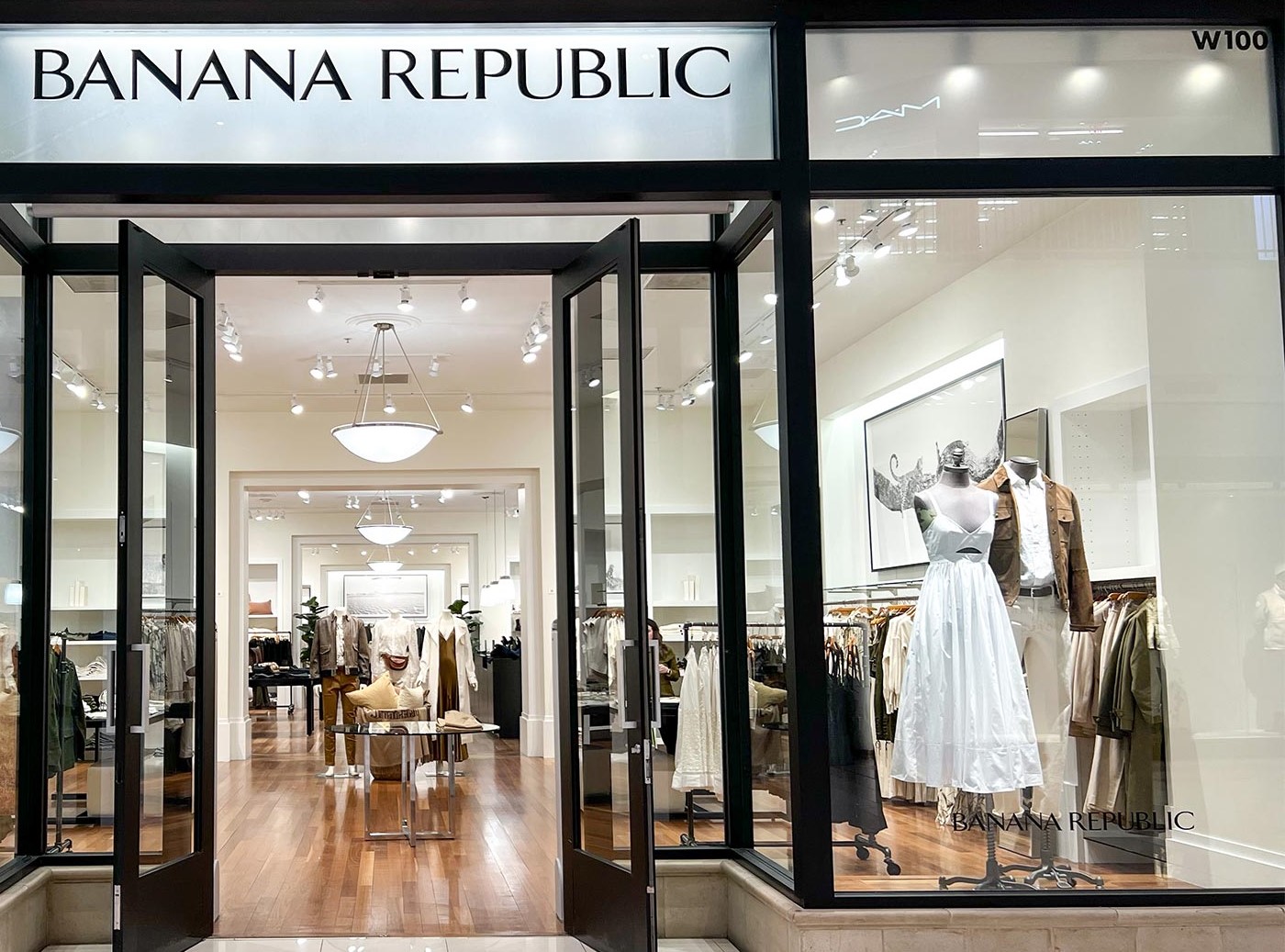
History of Banana Republic

Mel and Patricia Ziegler co-founded Banana Republic back in 1978. Mel was a reporter for the San Francisco Chronicle, and Patricia worked as a courtroom artist for the same paper. They lived in an apartment on Russian Hill.

Mel and Patricia Ziegler started the company with $1,500 and no retail experience. The company originally called the "Banana Republic Travel & Safari Clothing Company". The Zieglers sold refashioned military surplus in a safari-themed boutique, a whole new retail concept.

The company was bought by Gap in 1983 and now operates as a division, now with over 600 stores located internationally. They also co-founded The Republic of Tea and ZoZa.com.

Gap Inc. is primarily owned by the Fisher family, heirs of Donald George Fisher, who co-founded The Gap Inc. with his wife Doris F. Fisher, back in 1969.
In 2005, Banana Republic opened its first store in Japan. The store was located in Printemps Ginza in Ginza, Tokyo.

In 2011, Banana Republic’s Mad Men collection, a unique collaboration with the Emmy Award-winning television show’s costume director, Janie Bryant, hits stores. Two more collaborations follow in 2012 and 2013.

Banana Republic has struggled at Gap over the years, generally overshadowed by Athleta and Old Navy. In year 2021, compared to 2019, Banana Republic and Gap’s sales dropped by 15% and 10% in Q2, while Athleta and Old Navy’s sales increased by 35% and 21%, respectively.
History of Banana Republic

History of Pennzoil Company

South Penn Oil Company, an oil business started in Oil City, Pennsylvania was founded by Michael Late Benedum and Joe Trees on May 27, 1889 as an oil-producing unit of the Standard Oil Trust. Standard Oil Company already controlled approximately 90 percent of the oil refining in the United States.

South Penn was one of the original companies of John D. Rockefeller's Standard Oil; it was forced into independence when the Standard trust was broken up in 1911. Under first president Noah Clark, South Penn made rapid progress with its initial wells and was soon pushing across the border into the rich West Virginia fields.

South Penn Oil Company became an independent company in 1911 when the Standard Oil Trust was dissolved. In 1925 South Penn purchased 51 percent of Pennzoil Co.; it bought the rest of the company in 1955. Pennzoil originally sold its lubricants under the brand name "Pennsoil," which was an abbreviation for William Penn's Oil. It was discovered, however, that customers pronounced the brand "Penn-soil," so the name was changed to Pennzoil.

In 1963, South Penn Oil merged with Zapata Petroleum and Stetco Petroleum to form a new "Pennzoil Company", headquartered in Houston and appointing Hugh Liedtke as president. Zapata Petroleum Corporation was founded in 1953 by future U.S. President George H. W. Bush, along with his business partners John Overbey, Hugh Liedtke, Bill Liedtke, and Thomas J. Devine.

In the 1960s Pennzoil aggressively marketed its trademark yellow can of motor oil, using golfer Arnold Palmer as the center of an advertising campaign, and used the profits from its products to further expand its oil supplies and operations.

In April 1998, Pennzoil and Quaker State Corporation announced a joint plan to restructure and combine their operations. Under the plan, Pennzoil would spin off its motor oil business, Jiffy Lube chain, and related operations into a new company. That company would then merge with Quaker State to form the Pennzoil–Quaker State Company.

This company in turn was purchased in 2002 by the Shell Oil Company, the American subsidiary of the Royal Dutch/Shell Group.
History of Pennzoil Company

5 Most Popular Posts

Business and financial news - CNNMoney.com